Vehicles Manager
Fleet Risk Management for 10–60 Vehicle Yards Without GPS
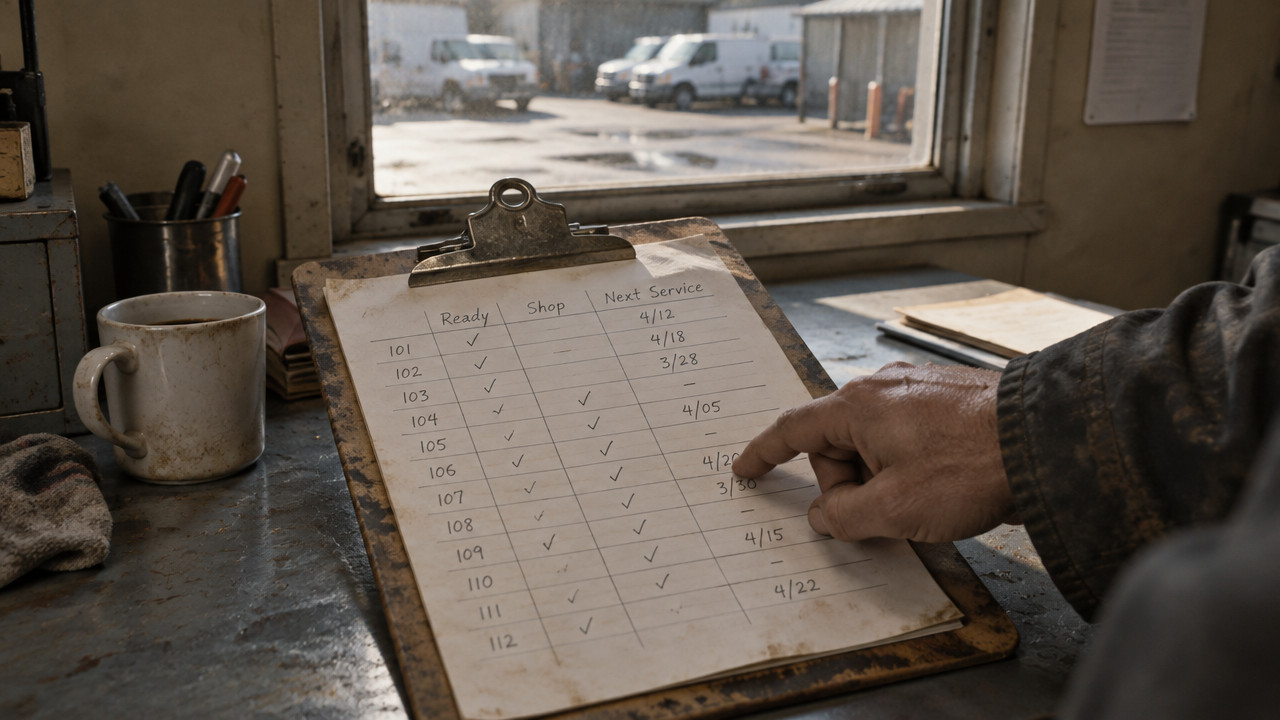
Fleet risk management for a 10–60 vehicle yard is not a dashboard problem. It is a 06:00 problem. Two people mark the same van 'in shop' and 'ready,' the sheet and the WhatsApp thread disagree, and dispatch sends it anyway. The fix is one row per vehicle and three states: ready, shop, next service. No GPS, no hardware, no contract. This guide shows where small-fleet risk really hides, what to check before roll-out, and how to build a board nobody can argue with.
Quick Answer: Fleet Risk Management Starts With One Rule, a Van Marked Shop Never Leaves
Fleet risk management comes down to a single rule: one status per vehicle, visible to everyone, changed by one person. No arguments, no conflicting reports, no vans leaving the yard when they should not. The fix costs $2.99 per vehicle and runs on any phone.
A live readiness board for small fleets replaces the spreadsheet fight with three clear states:
- Ready: The vehicle passed inspection and is cleared for dispatch.
- Shop: The unit is under repair and must not leave the yard.
- Next Service: The vehicle has a scheduled maintenance date visible to all.

The 06:00 Handoff Is Where Small Fleets Actually Get Hurt
The morning handoff breaks down in the same way everywhere. The yard manager marks a van 'in shop' on the whiteboard. Dispatch sees 'ready' on last night's saved spreadsheet and sends the crew. By 07:30, the shop calls asking where the van went. The risk was not speed or reckless driving. The risk was two people looking at two different versions of the truth.
Smaller operations hide this risk well until it costs real money. The owner relies on one person who 'knows the sheet.' When that person is out sick, the whole yard operates on guesswork and WhatsApp messages from an hour ago. According to Lytx, collision rates per vehicle rose only 4% in 2025, but the root cause often traces back to communication gaps at roll-out, not driver behavior on the road.
A contractor fleets running a morning board see the same failure patterns repeat:
- The spreadsheet said 'ready' but the chat thread said 'shop.'
- The key hook was empty but the booking calendar showed the car reserved.
- The only person who knew the real status was on vacation.
- The saved file was six hours old and nobody checked.
GPS Tells You Where the Van Is, Not Whether It's Allowed to Leave
GPS answers one question: where is the vehicle right now? It does not answer the question that matters at 06:00: is this unit cleared to leave the yard? A rental lot shows the gap clearly. The booking calendar says the silver pickup is reserved for a 10:00 pickup. The key hook is empty because the transmission failed at 08:00. By lunch, two people argue over who told whom and when.
Location tracking is valuable for fleet safety management when you need to recover a stolen vehicle or verify a delivery. But for rental lots where a car in the shop gets handed over, GPS provides no protection against the operational failure. The unit is still on the lot. The mistake happened before anyone turned the key.
| Feature | GPS Tracking | Readiness Board |
|---|---|---|
| Question answered | Where is the vehicle? | Is it cleared to leave? |
| Hardware required | Yes, installed in each unit | No |
| Contract type | Multi-year license common | Month-to-month, cancel anytime |
| Best fit | Large fleets with dispatch desk | 10–60 vehicle yards, one manager |
Brakes and Missing Paperwork: The Risks You Can Schedule Away
Vehicle out-of-service status hits small fleets harder than large ones. When a 40-truck operation has one unit sidelined for brake violations, dispatch adjusts. When a 12-van contractor loses one on a roadside inspection, the morning scramble compounds. The 'next service' state turns inspections into a visible due date that everyone sees, not a note buried in a shop folder.
Prevention costs less than a roadside stop every time. During CVSA's 2026 International Roadcheck, brake-related violations accounted for 39.1% of vehicle out-of-service violations, according to Fleetio. A missing medical card drove another chunk of violations that had nothing to do with the truck itself. Paperwork gaps and deferred maintenance create the same outcome: a unit that cannot legally run.
For trades fleets with daily inspection needs, run these five checks before you roll out any board:
- Ready: Confirm the morning inspection form is complete and filed.
- Shop: Verify the shop has communicated the expected return date.
- Next Service: Check that oil changes and inspections have visible due dates.
- Paperwork: Confirm registration and insurance cards are in the glovebox.
- Driver files: Verify medical cards are current and accessible.
How to Replace the Spreadsheet and WhatsApp Thread With a Board in One Morning
Setting up a readiness board is not a database project. You list your vehicles, pick the three states, and decide who has permission to change them. Most yards finish the whole thing during a 15-minute setup call. The first month is free, no card required, and you delete the board if it does not work. For landscaping crews that roll out at dawn, the process looks like this:
- List every vehicle by unit number or plate on a single board.
- One row per vehicle, no duplicates.
- Set each unit to ready, shop, or next service before the first dispatch.
- Start clean, no legacy statuses.
- Name the one or two people who can change a status.
- Single owner per status, no committee.
- Add the expected return date for any unit in the shop.
- Dates prevent the 'when is it back' question.
- Walk the yard manager through the mobile view on their phone.
- The board lives in their pocket, not on a desk.
- Use the board for one week, then add a second branch if needed.
- Prove it works before you expand.
When the Sheet Owner Is Out, Your Risk Plan Walks Out With Them
Single-person dependency is the hidden risk in most small yards. The spreadsheet lives on one laptop. The whiteboard lives in one person's head. When that person takes a vacation, gets sick, or simply goes home early, the yard loses its operational memory. Dispatch starts calling around. The shop gets conflicting instructions. The risk surface expands every hour the sheet owner is away.
A shared board removes the single point of failure. Each branch or department sees only its own units, but the status is visible to anyone with access. For municipal fleets split across departments, public works sees public works, and parks sees parks. No one accidentally dispatches a truck that belongs to another branch.
The difference plays out like this:
- Before: One person knows which units can leave. Everyone else guesses.
- After: The board shows ready, shop, or next service for every vehicle in the yard.
What $2.99 a Vehicle Buys Compared With One Wrong Dispatch
The math is plain. A 25-vehicle yard pays $74.75 a month after the free trial. No GPS license, no hardware installation, no annual contract that locks you in. You start with a 15-minute call, run the board for a month without a card on file, and cancel by deleting it if the fit is wrong. Check fleet board pricing for different fleet sizes:
| Vehicles | Monthly Price |
|---|---|
| 15 | $44.85 |
| 25 | $74.75 |
| 40 | $119.60 |
Key Takeaways: The Five-Line Risk Checklist for Your Next Morning Board
Fleet operational risk in a 10–60 vehicle yard comes down to knowing which units can leave. The morning board is not a report. It is a status system that prevents the van marked 'shop' from driving away. For movers who need trucks ready before the crew arrives, the checklist is short:
- One row per vehicle, no duplicates, visible to everyone who needs it.
- Three states only: ready, shop, next service.
- One owner per status change, no arguments over who said what.
- No GPS, no hardware, no multi-year contract required.
- Start your board this week before the next 06:00 mistake happens.
FAQ: Straight Answers on Fleet Risk, Spreadsheets and Switching
We already have a spreadsheet. Why do we need a board?
You do not need a board if the spreadsheet never conflicts with the chat thread. But if two people ever mark the same unit differently, or if dispatch sends a van that is in the shop, the spreadsheet has already failed. A board prevents the conflict by holding one status per vehicle and showing it to everyone at once.
Is this GPS tracking?
No. GPS tracks where the vehicle is. A readiness board tracks whether the vehicle is allowed to leave. Most small fleets with 10–60 units do not need location data to manage their morning dispatch. They need to know which units are in the shop.
Is there a long-term contract?
No multi-year contract. You pay month-to-month after the first free month. Cancel by deleting the board. No hardware to return, no license to transfer, no early termination fee.
Will this work for a 5-vehicle fleet?
Probably not. A five-unit yard can usually manage status in a group chat without much conflict. The board is built for 10–60 vehicles where the spreadsheet and WhatsApp thread have become unmanageable. If you can run your yard from memory, you do not need this.
Does this handle routing or dispatch scheduling?
No. The board answers one question: is this unit ready, in shop, or due for service? It does not optimize routes, track driver hours, or manage customer bookings. If you need those features, look for shipping fleets that need a clear go or no-go on vehicle status and pair it with a separate routing tool.
Mon Oct 26 · Editorial Team