Vehicles Manager
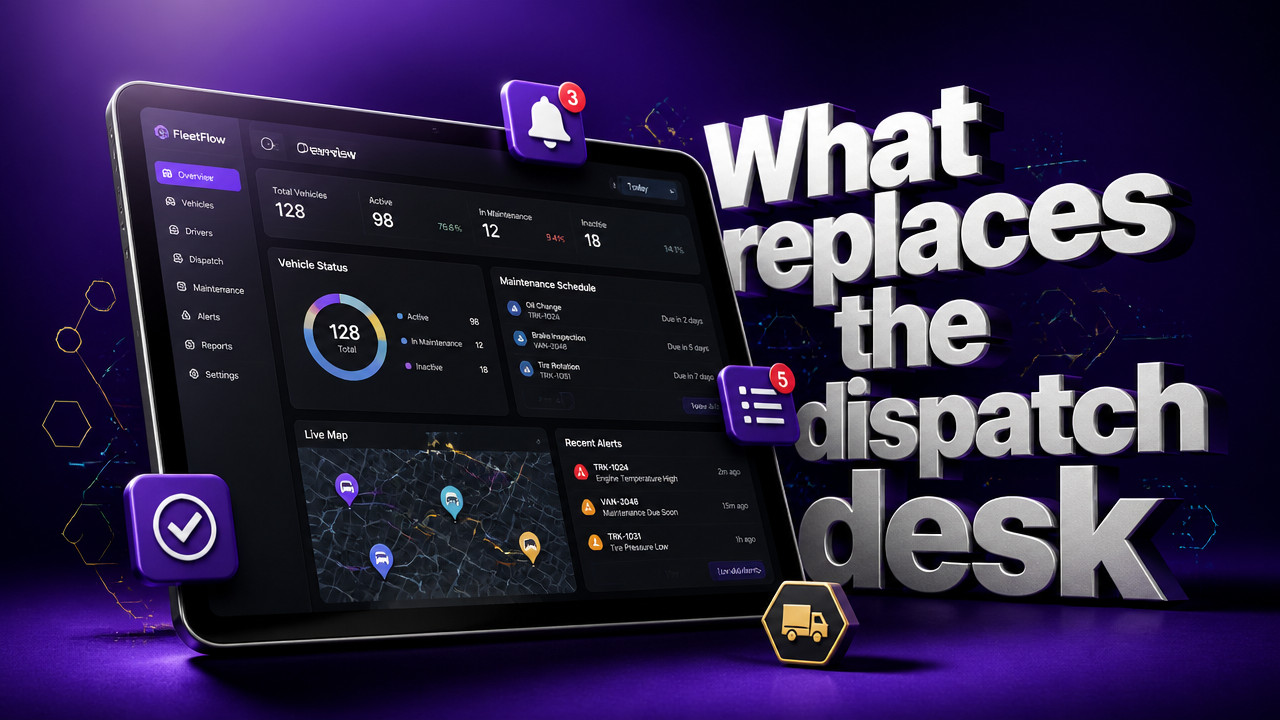
How Small Contractors Manage Vehicle Maintenance Status Without a Dispatch Desk
Small contractors running 10–60 vehicles face a morning coordination problem that GPS and enterprise fleet software never solve: knowing which truck can actually leave the yard right now. Without a dedicated dispatch desk, these operators rely on spreadsheets, WhatsApp threads, and yard boards to track maintenance status methods that break down the moment two people mark the same van ready and in-shop simultaneously. The solution lies not in expensive telematics or multi-year contracts, but in single-source status tools that replace the Excel-WhatsApp chaos with one morning row per vehicle.
Quick Answer: The Spreadsheet-WhatsApp-Board Triangle
Small contractors trying to figure out how to manage their vehicle maintenance status without a dispatch desk almost always fall into the same three-tool trap. The yard manager keeps a master spreadsheet. The crew communicates via WhatsApp. The physical board on the wall shows what was true yesterday. Each tool has a strength, but together they create a coordination nightmare. GPS tracking tells you where the truck is right now, but it cannot tell you whether that truck is cleared to leave the shop. That visibility gap costs contractors real money every single morning.
The real failure happens between 06:00 and 07:00. That is when the morning rush hits. Two people update the same vehicle. The shop marks it in for repairs. Dispatch marks it ready. The spreadsheet lives on someone's desktop. The WhatsApp thread scrolls past in minutes. By the time anyone notices the conflict, the van is already on the road, and the customer is waiting for a repair that will not happen today contractor fleet boards exist specifically to solve this morning visibility problem.
| Tool | Strength | Breaking Point |
|---|---|---|
| Spreadsheet | Permanent record, sortable columns | Single owner, version conflicts, offline access |
| WhatsApp Thread | Real-time updates, mobile access | Messages disappear, no single truth, scroll fatigue |
| Physical Board | Visible in yard, tangible status | Stale data, manual updates, weather damage |

Why One Person's Spreadsheet Becomes the Single Point of Failure
Every small fleet has that one person who owns the sheet. Maybe it is the yard manager. Maybe it is the owner's spouse. Maybe it is the dispatcher who has been there for fifteen years. That spreadsheet lives on their desktop, their laptop, or their personal Google Drive. When that person goes on vacation, calls in sick, or steps out for a two-hour meeting, the entire fleet readiness tracking system collapses. Nobody else knows which tab holds the current data. Nobody knows if the version labeled "FINAL v3" is actually the final version.
The spreadsheet bottleneck creates a dangerous dependency. The person who owns the sheet becomes the only person who knows which units can leave. When that person is not there, dispatch guesses. The shop assumes. Someone drives a truck that should have stayed put. This scenario plays out all across contractors running fleets in that 10 to 60 vehicle range fleet status tracking removes that dependency entirely.
- The sheet owner calls in sick and nobody can find the current version of the morning board.
- Two managers update different copies of the same spreadsheet and overwrite each other's changes.
- The laptop holding the master file crashes and the last backup is from three weeks ago.
- A manager accidentally sorts only one column, breaking all vehicle data alignment with status rows.
- The spreadsheet format changes quarterly and nobody updates the printed copies in the shop.
The WhatsApp Thread: Real-Time Updates That Disappear by Lunch
Contractors love WhatsApp for a reason. It is fast. Everyone has it on their phone. The mechanic can snap a photo of a broken belt and send it in seconds. The driver can report a check engine light before they even pull over. But chat threads make terrible vehicle status boards. A message about a van entering the shop posts at 06:15. By 11:00, it is buried under forty other messages about lunch orders, traffic updates, and customer call times.
The async nature of chat creates a deeper problem. Messages do not stack into a board. They scroll into oblivion. Dispatch cannot glance at WhatsApp and see the full fleet status at 07:00. They have to scroll, remember, and hope they did not miss anything. On a rental lot, the booking calendar says the car is reserved. The WhatsApp thread says it is in the shop. By the time the customer arrives, nobody knows which source is correct rental fleet coordination puts status in one place that does not scroll away.
[Study] Preventive Maintenance Coordination Saves 3–5× Repair Costs
Status tracking is not just about avoiding morning confusion. It directly impacts the bottom line. When a fleet of 10–60 vehicles runs without clear shop status visibility, small issues become expensive repairs. A van that should have stayed in the shop for a brake inspection gets dispatched anyway. Three days later, that brake fails on the highway. The repair cost triples. The downtime doubles. The customer relationship suffers irreversible damage.
According to Spytec, studies show that unplanned repairs cost 3-5 times more than scheduled maintenance. That multiplier makes a brutal financial case for morning board clarity. If the shop marks a vehicle down for preventive work, dispatch needs to see that status before the van leaves. Not after. Not when the driver calls in with a breakdown. Not when the customer complains about a late delivery. Proactive status tracking catches issues before they become expensive surprises trades fleet maintenance keeps that visibility front and center.
How to Build a Morning Status Board Without Software Overhead
Small contractors do not need another ERP project. They do not need a six-week implementation timeline. They do not need a consultant charging $200 per hour to configure user permissions. A morning dispatch board for 10–60 vehicles should take fifteen minutes to set up. Paste the vehicle list. Assign the states. Grant access. Done. The board should not ask for odometer readings, fuel logs, or inspection checklists. It should answer one question: can this vehicle leave right now?
The beauty of a simple board is its durability. No GPS hardware to install. No multi-year contract locking the yard into a tool they hate. No training sessions that take drivers off the road for half a day. The board just sits there, holding one row per vehicle, telling the truth about what can leave municipal fleet boards work on the same principle.
- Paste your complete vehicle list into the board template.
- Assign each vehicle one of three states: ready, shop, or due.
- Grant access to the yard manager, shop lead, and dispatch.
- Set a morning deadline for status updates usually 06:30 for 07:00 dispatch.
- Review the board during the morning meeting and release vehicles by status.
Three States That Stop Shop-Marked Vans From Leaving at 06:00
Complex fleet software fails small contractors because it asks too many questions. Is the vehicle active? In reserve? Out for repair? Awaiting inspection? Pending decommission? These distinctions matter to accountants. They do not matter to the yard manager at 05:45. That manager needs three states. Ready means the vehicle can leave now. Shop means it is in the bay and cannot move. Due means it needs service soon and should be scheduled. Anything beyond that creates confusion, not clarity.
The three-state model eliminates the WhatsApp-spreadsheet fight. When the shop marks a van shop, that status holds. Dispatch cannot mark it ready from their phone. The yard manager cannot overwrite it from their laptop. One status per vehicle. One source of truth. No more sending a van that the mechanic already pulled into the bay shipping dispatch boards use a similar single-status approach.
- Ready: Vehicle passed morning inspection and can be dispatched immediately.
- Shop: Vehicle is in the repair bay and cannot leave until the shop marks it ready.
- Due: Vehicle needs scheduled service within the next week and should be prioritized.
[2026 Data] Driver-Reported Issues Cut Downtime When Status Is Visible
Drivers are the first line of defense in small fleet management. They hear the rattle. They feel the pull. They see the warning light before anyone else. But driver feedback only works when there is a clear place to put it. A driver who reports an issue in a WhatsApp thread hopes someone sees it. A driver who marks a vehicle shop on a board knows the status holds. That visibility creates accountability. The shop sees the mark. Dispatch sees the mark. The van stays put until a mechanic clears it.
According to Constructionequipment, training drivers to perform basic inspections and report issues early can significantly improve vehicle upkeep and reduce unplanned downtime. The key is giving drivers a way to report that actually works. Not a chat message that scrolls away. Not a spreadsheet they cannot access. A board they can mark from their phone that instantly updates the fleet status everyone else sees landscaping fleet tracking gives drivers that visibility.
Key Takeaways
Small contractors running 10–60 vehicles cannot afford enterprise fleet software. They cannot afford GPS contracts that answer where the truck is but not whether it can leave. They cannot afford Excel-WhatsApp chaos that sends shop-marked vans onto the road. The fix is simpler than anyone expects: one board, one status per vehicle, three states that hold the truth simple fleet pricing starts at $2.99 per vehicle with no long-term commitment.
- Spreadsheets and WhatsApp threads create version conflicts that cause dispatch errors at 06:00–07:00.
- GPS tells you where the vehicle is, not whether it is cleared to leave the yard.
- Single-source status boards replace the spreadsheet-WhatsApp triangle with one visible truth.
- Three states ready, shop, due answer the only question that matters at morning dispatch.
- Proactive status tracking prevents 3–5× repair cost multipliers from deferred maintenance.
FAQ
Can a status board completely replace our morning spreadsheet?
Yes. A single-source status board eliminates version conflicts by holding one status per vehicle that everyone sees. Most small contractors transition their maintenance coordination without software by pasting their vehicle list into a board and retiring the spreadsheet within a week.
Do we need GPS tracking to use a vehicle status board?
No. GPS and status boards answer different questions. GPS tells you location. The board tells you permission to leave. Many contractors use status boards specifically because they do not want hardware installations or GPS contracts moving company fleet boards run without any telematics integration.
Can multiple departments access the same fleet board?
Yes. Role-based access lets the yard manager, shop lead, and dispatch all see the same status. Each person marks updates in their area. The board prevents conflicting statuses by locking each vehicle to one state at a time.
How long does setup take for a 30-vehicle fleet?
About 15 minutes. Paste the vehicle list, assign initial states, and grant access. No hardware. No multi-week implementation. No consultant fees. The board works immediately and shows value by the next morning dispatch.
Is there a long-term contract required for fleet status tools?
No. Month-to-month pricing at $2.99 per vehicle means no multi-year lock-in. Contractors can try the board for a month and cancel if it does not solve the morning coordination problem. Most stay because the alternative is returning to spreadsheet chaos.
Sun Oct 18 · Editorial Team