Vehicles Manager
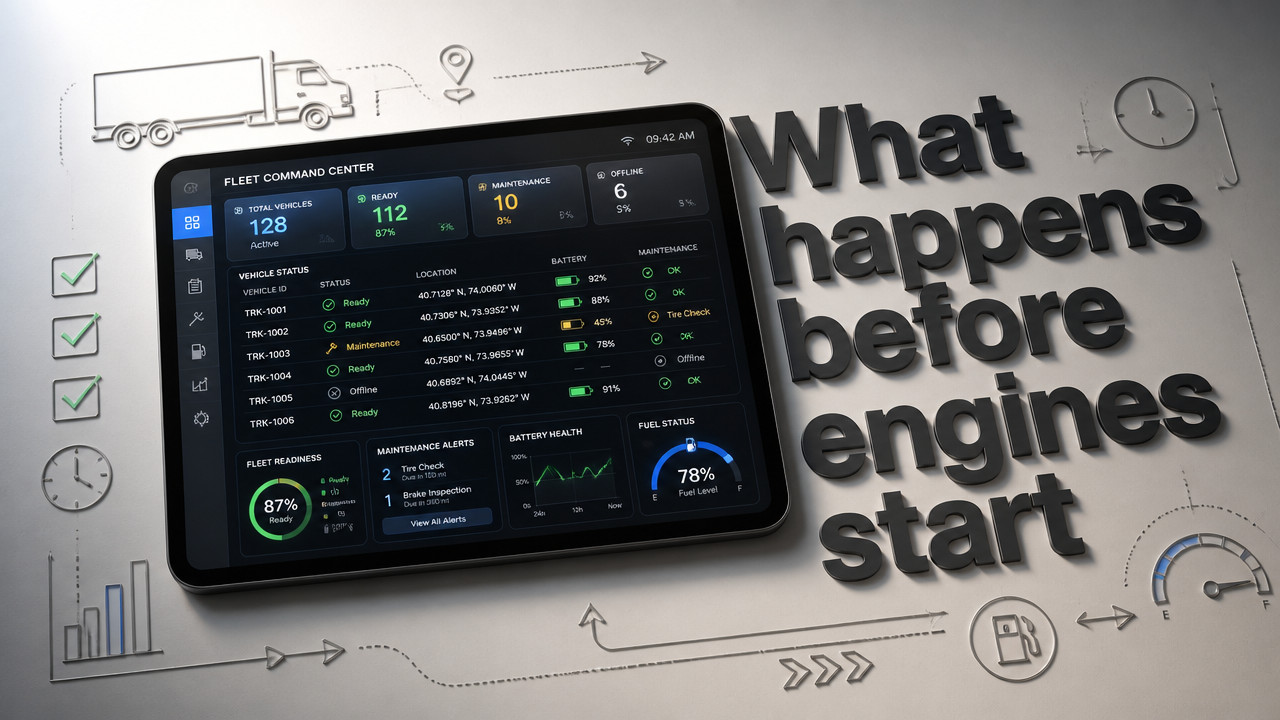
How Small Fleet Operators Track Vehicle Readiness Every Morning
Small fleet operators establish vehicle readiness in the first hour of every workday using a single-row snapshot: ready, in shop, or service due. This morning board replaces spreadsheet conflicts and prevents dispatch errors when two people mark the same vehicle differently. The method works because it answers one question can this vehicle leave the yard today not where it is or how much fuel remains. The board stays live, updates instantly, and shows only what matters before keys leave the hook.
Quick Answer: The Single-Row Morning Snapshot Method
The daily vehicle readiness check comes down to one row per vehicle. Instead of scanning GPS maps or digging through maintenance logs, the yard manager looks at a single line that shows three possible states. This is how small fleet operators track vehicle readiness every morning without the overhead of enterprise systems.
Each vehicle row displays exactly one status:
- Ready The vehicle is available for dispatch today. It passed inspection, has no open shop tickets, and can leave the yard immediately.
- Shop The vehicle is in the shop or awaiting repairs. It cannot leave until a technician marks it ready, preventing accidental dispatch.
- Service Due The vehicle needs scheduled maintenance soon. It may still be available today, but the board flags the upcoming work.
This three-state model cuts through the noise. GPS can tell you where a truck is located, but it cannot tell you if that truck is cleared to leave. A vehicle might be parked in the lot while the brakes are being replaced. Location data misses that critical detail. The live readiness board solves this by showing yard fitness, not coordinates.

The 06:00–07:00 Collision Every Small Fleet Knows
The morning rush creates a specific kind of chaos. Between 06:00 and 07:00, the shop mechanic, the dispatcher, and the yard manager all need to update the same vehicle list. In a spreadsheet world, that means three people editing one file at the same time. Version conflicts are inevitable.
Here is how it plays out. The mechanic marks Van 12 as "in shop" at 06:15. The dispatcher, working from a version downloaded at 06:00, sees Van 12 as "ready" and assigns it to a crew. By the time the crew reaches the yard, the van is on a lift. The job gets delayed. The customer waits. The spreadsheet did not sync.
WhatsApp does not solve this. The chat thread moves fast, and the important updates get buried. Someone posts "Van 12 in shop" at 06:15, but by 07:00 that message is forty lines deep. The dispatcher does not scroll back far enough. The crew still gets sent to a vehicle that cannot leave.
According to Autosist, daily morning snapshots of fleet availability are a key practice for small fleet operators who want to avoid these dispatch errors. The contractor fleet board replaces the spreadsheet and WhatsApp thread with a single source of truth that updates in real time.
| Method | Update Conflict | Dispatch Accuracy |
|---|---|---|
| Shared Spreadsheet | High last save wins, earlier edits lost | Low multiple versions circulate |
| WhatsApp Chat | Medium messages buried in thread | Low key updates missed in scroll |
| Morning Readiness Board | None one status per vehicle, live updates | High shop status blocks dispatch |
Why Small Fleets Track Readiness Without GPS
GPS tracking has its place. It tells you where the vehicle is right now. But location is not the same as availability. A truck can be parked in the yard and still be undrivable. The transmission is out. The inspection failed. The registration expired. GPS shows the truck in the lot, so dispatch assumes it is ready.
This distinction matters for small contractors and rental operators. They do not need to know that Van 12 is at 34th and Main. They need to know whether Van 12 can take a customer to the airport at 08:00. That is a yard question, not a location question.
There is another reason small fleets hesitate to adopt GPS: the contract. Many GPS providers lock customers into three-year agreements with hardware installation requirements. Small fleet owners say things like "We are locked in a three-year GPS contract and cannot wait to get out." They want a simpler solution that solves their immediate problem without the long-term commitment.
The readiness board fills that gap. No hardware. No multi-year contract. Just a $2.99 per vehicle pricing model that shows yard status without tracking location. The board answers the question that actually matters at 06:00: can this vehicle leave today?
How Contractors and Rental Operators Build the Morning Board
Setting up a morning board takes minutes, not weeks. The process is designed for small fleets that do not have IT departments. The goal is to get from spreadsheet chaos to a live status board before the next morning dispatch.
Here is the step-by-step approach:
- Paste the vehicle list. Copy the units from the existing spreadsheet or yard inventory. Each vehicle gets one row.
- Assign yard visibility. If the operation runs multiple lots, each yard manager sees only their own vehicles. No crossing streams.
- Set status rules. Define what "ready" means for the operation. Inspection passed? Fuel level above a certain threshold? Customize the criteria.
- Attach service dates. Add upcoming maintenance schedules to each vehicle row. The board flags service due before it becomes service overdue.
- Enable morning access. Give the shop, dispatcher, and yard manager access to update status. One change updates the board for everyone instantly.
The trades fleet management setup keeps service records attached to the vehicle row. When the shop finishes a repair, the receipt and completion date stay with that unit. No more digging through WhatsApp threads to find out when the brakes were done.
Morning Board Rules That Stop Dispatch Errors
A morning board only works if everyone follows the same rules. The system is built on a few simple principles that prevent the errors small fleets see every day.
One status per vehicle. This is the core rule. A vehicle cannot be both ready and in shop. The board enforces mutual exclusivity. When the shop marks a vehicle "shop," it stays shop until someone with authority changes it. No simultaneous edits. No conflicting versions.
Yard isolation. Each yard sees only its own fleet. A rental location on the east side does not see the west side's inventory. This prevents "quiet borrowing" where one yard dispatches a vehicle that another yard already reserved.
Shop status blocks dispatch. When a vehicle is marked shop, the board treats it as unavailable. Dispatch cannot assign it to a job. The key hook stays empty. The rental calendar does not show it as bookable. The status change happens instantly, so there is no lag between the mechanic's decision and the dispatcher's view.
The rental fleet board applies these rules automatically. No one has to remember to check a separate system. The board itself enforces the workflow.
| Rule | What It Prevents | Who It Protects |
|---|---|---|
| One status per vehicle | Conflicting versions, double-booking | Dispatch, customers, shop |
| Yard isolation | Quiet borrowing, cross-lot confusion | Yard managers, rental staff |
| Shop blocks dispatch | Sending a vehicle under repair | Customers, drivers, reputation |
What Triggers the Switch from Spreadsheet to Readiness Board
Most small fleet owners do not wake up wanting new software. They switch because something went wrong. A specific incident made the spreadsheet unworkable. The landscaping fleet tracking adoption often starts after a crew stands in the yard waiting for a truck that is not there.
Three trigger events push owners to make the change:
- The shop vehicle already left. At 06:00, the dispatcher sent Van 12 to a job site. At 06:15, the shop called asking why the van they were working on was gone. The spreadsheet said ready. The shop said in repair. The van left anyway.
- The sheet owner is out. The yard manager who maintains the spreadsheet took a sick day. No one else knows which vehicles are cleared. Dispatch calls around, guesses, and hopes. The spreadsheet lives on one person's desktop, and that person is not there.
- The rental calendar and key hook disagree. By lunch, a rental customer is standing at the counter for a car that is actually in the shop. The booking calendar showed availability. The key hook confirmed it. But the shop status was never updated. The customer leaves angry, and the counter staff looks incompetent.
These moments create the opening for a change. The fleet owner realizes that the cost of the error exceeds the cost of fixing the system. The morning board becomes not just a nice-to-have but a necessary correction.
[2026 Data] Small Fleet Tracking Adoption and the Readiness Gap
Fleet technology adoption looks different for small operators than for large enterprises. The municipal fleet board users, for example, face different pressures than a three-truck landscaping crew. But the numbers show a consistent pattern: smaller fleets adopt technology more slowly, and they adopt different technology than the big players.
According to Spytec, small fleet tracking adoption is growing but still below larger fleets, with roughly 67% of commercial fleets using some form of GPS tracking in 2026. That leaves a significant portion of the market operating without real-time visibility either because GPS does not fit their workflow or because the contract terms feel too rigid.
The readiness gap is real. Many small fleets have location tracking but lack operational-status visibility. They know where the truck is but not whether it can leave. This gap is exactly what the morning board fills. It provides the operational snapshot that GPS was never designed to deliver.
Key Takeaways: Morning Readiness in Three States
The morning readiness model distills fleet management down to its essential question: what can leave the yard today? Everything else is secondary. The single-row, three-state approach keeps the focus tight and the errors low.
- One row per vehicle. No complex dashboards. No buried menus. Each unit appears on the board exactly once, with a status that anyone can read at a glance.
- Three states only. Ready, shop, service due. These options cover the morning decision. Anything more is noise.
- No GPS required. Location is a different problem. The board answers yard fitness, not geographic tracking.
- Month-to-month, no lock-in. The open board pricing means $2.99 per vehicle with no multi-year commitment. Fleets stay because it works, not because they are trapped.
FAQ: Small Fleet Morning Readiness Tracking
How does the morning board prevent spreadsheet conflicts?
Yes, it prevents conflicts. The board allows only one status per vehicle at any time, eliminating version clashes. Unlike shared spreadsheets where saves can overwrite each other, the morning board updates instantly for all users. The last edit is always the current status.
Is the readiness board the same as GPS tracking?
No, it serves a different purpose. GPS shows vehicle location on a map. The readiness board shows yard fitness for dispatch. A vehicle can be parked in the lot and still be undrivable. GPS misses that distinction entirely.
Can rental operators use this for booking conflicts?
Yes, rental lots benefit significantly. The board shows which vehicles are available for booking versus which are in shop. When the key hook and calendar disagree, the board provides the definitive answer. Rental staff stop promising cars they cannot deliver.
How long does setup take for a 20-vehicle fleet?
Setup takes minutes. Paste the vehicle list, assign yard visibility, and set status rules. Most small fleets complete the process in under an hour. No IT support required.
Can separate yards see each other's vehicles?
No, yard access is isolated. Each yard manager views only their own fleet. This prevents cross-location confusion and eliminates quiet borrowing. A vehicle at Yard A does not appear on Yard B's board.
Is there a long-term contract requirement?
No, the model is month-to-month. At $2.99 per vehicle, fleets pay monthly with no multi-year lock-in. Many owners specifically mention their relief at avoiding another three-year commitment.
Does the board track fuel or maintenance history?
It tracks status and service dates. The board shows upcoming service due and holds shop receipts on the vehicle row. It is not a full maintenance log or fuel tracking system. It answers the morning question: can this vehicle leave?
The shipping fleet status board operates on the same principle single-row visibility that replaces the morning spreadsheet fight. Small fleet operators in 2026 continue to adopt this method because it works for the actual workflow: one yard, one question, one status per vehicle.
Wed Sep 30 · Josh B