Vehicles Manager
Managing a Small Fleet Without GPS: Dispatch From One Row
You manage a small fleet without GPS by keeping one row per vehicle with three states, ready, shop and next service, and dispatching only from that row. GPS tells you where a van is, not whether it is cleared to leave, and that is the question at 6 a.m. when the spreadsheet and the chat thread disagree. A fleet readiness board works because one shared record replaces the private file only one person understands, though yards with drivers on the road all day or a theft risk may still want location data on top. The decision is whether your daily problem is finding vehicles or knowing which ones can go out.
How Do You Manage a Small Fleet Without GPS?
One row per vehicle with three states solves the dispatch question that GPS cannot answer. The board tells you what is cleared to leave, not where it is parked, and that distinction is what matters when the morning rush starts.
- One row per vehicle with ready, shop, or next service status visible to everyone.
- Dispatch clears only ready vehicles because the board is the single source of truth.
- Shop status blocks dispatch even if an old chat message says the van is available.
- Next service dates prevent sending out a van due for oil change or inspection.
- No hardware or GPS contract is required, just a shared board that replaces the spreadsheet.
The core problem is not tracking. It is dispatch authority. When two people mark the same van differently, one saying shop and one saying ready, dispatch still sends it because nobody knows which record is current. A fleet readiness board fixes that by making one status visible to the yard, the shop, and dispatch at the same time. You can set up a live readiness board for small fleets in minutes, and the only thing it tracks is whether each vehicle is fit to leave.
Why Location Data Doesn't Answer the 6 A.M. Question
Dispatch needs to know if a van is allowed to leave. A map pin shows where the van is parked, but it cannot tell you whether the mechanic cleared it or the booking calendar claims it. The gap shows up at 6 a.m. when the spreadsheet says one thing, the WhatsApp thread says another, and dispatch guesses.

This is not a GPS problem. GPS is useful for tracking and routing, and fleets with drivers on the road all day often need it. The issue is that location data answers the wrong question for the morning board. Dispatch does not need to know where the van is. Dispatch needs to know whether the van can go out. A van sitting in the yard might be ready, or it might be waiting on parts. The map pin looks the same either way.
According to Spytec, GPS fleet tracking adoption among small fleets has grown significantly, but many yards still struggle with the basic readiness question because location alone does not solve the dispatch conflict. The spreadsheet and the chat thread create the real problem, and adding GPS does not fix it.
- Two people mark the same van one puts "in shop" on the spreadsheet, another puts "ready" in the chat, and dispatch sends it anyway.
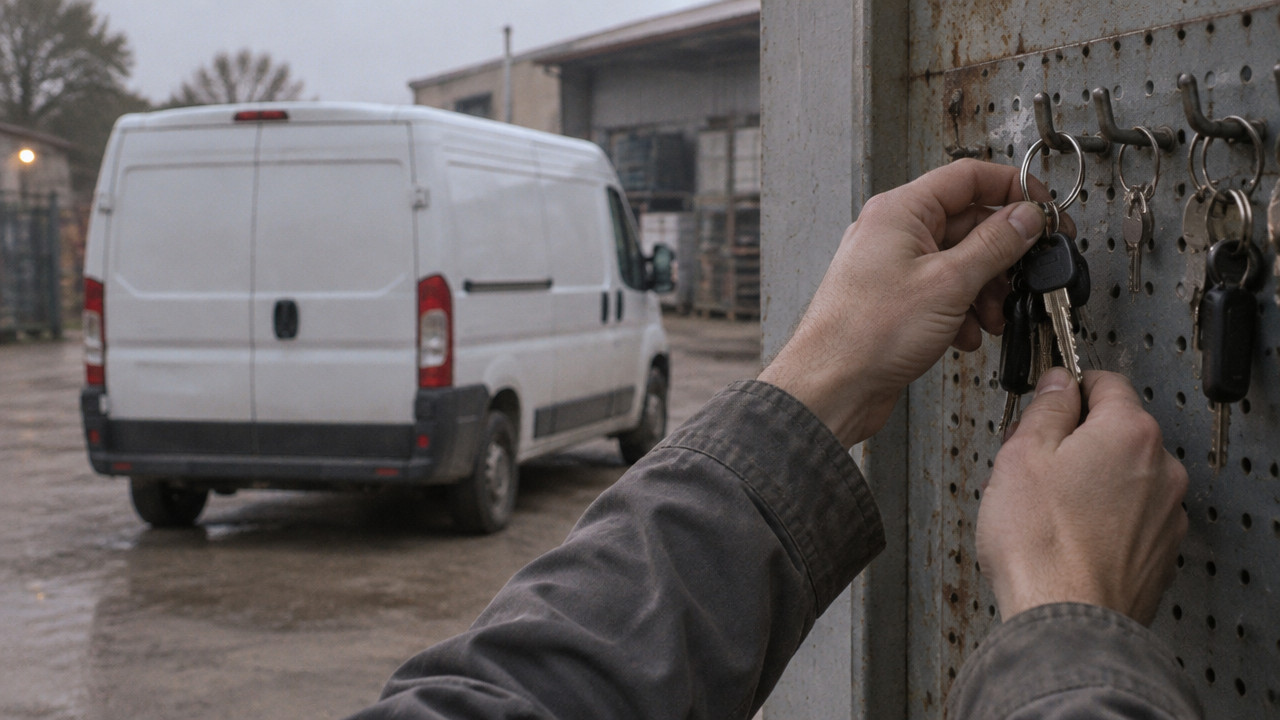
- The booking calendar disagrees with the key hook a rental lot hands a car to a customer, then finds out it was already in the shop.
- Only the sheet owner knows the truth if that person is out, nobody can run the board.
- Chat threads bury the current status by noon there are fifty messages, and the last update is lost in the scroll.
The contractor fleets that run their yards from spreadsheets and group chats are not failing because they lack GPS. They are failing because dispatch has no single source of truth. The van marked shop still leaves because nobody sees the mechanic's update, or because dispatch follows an old message instead of the current board.
How to Run a Three-State Morning Board, Step by Step
Any small yard can run the board from one list. Every vehicle gets one row with three states: ready, shop, and next service. Setup takes minutes, and dispatching from the board becomes the new normal by the second morning.
- Paste your vehicles into the board. List every truck, van, and unit by name or number. The board does not need VINs or specs, just enough for the yard to recognize each one.
- Mark the shop status. The mechanic or yard manager sets vehicles to "shop" when work is in progress. That status blocks dispatch until someone clears it.
- Add next service dates. Put the next oil change, inspection, or maintenance date on each row. A van due for service tomorrow should not leave today without a plan.
- Clear vehicles to ready. When work finishes and the unit is fit to go, mark it ready. Dispatch can now assign jobs to that vehicle.
- Dispatch only from the board. No more sending the van because of a chat message or a guess. If it is not marked ready, it does not leave.
- Update in real time. When status changes, the board shows it immediately. The spreadsheet no longer lives on one person's desktop.
- Review the board every morning. Walk through the list at 6 a.m. and confirm what can roll. The entire yard sees the same answer.
The steps stay the same whether you run trades and service fleets, rental lots, or delivery vans. The board replaces the private file with a shared record. No hardware, no software installation, and no multi-year contract. You paste the vehicles, mark the shop, and dispatch from what is ready.
What the Board Has to Answer in Different Yards
Every yard asks the same readiness question in a different form. The common thread is that dispatch needs to know what can roll, and the spreadsheet plus chat thread fails to answer that question reliably.
On a rental lot, the booking calendar says one thing and the key hook says another. A customer arrives for a reservation, and the desk hands over a car that was marked for the shop. The board aligns the calendar with the actual status so the desk can see what is available before handing out keys. For rental lots, the board prevents the double-booking that happens when reservation software does not talk to the mechanic.
Contractors and movers face a different version. The crew shows up, the schedule says where to go, and dispatch assigns a truck. The problem is that nobody told dispatch the truck is in the shop. The job waits while the crew stands in the driveway. The board answers the question before the crew arrives: which truck is fit to leave?
| Yard Type | The Morning Question | What the Board Prevents |
|---|---|---|
| Rental lot | Does the booking match the actual vehicle status? | Handing a shop vehicle to a customer |
| Contractor fleet | Which vans can leave this morning? | Sending a crew to a truck that is in the shop |
| Moving company | Which box truck is ready for the job? | Dispatch guessing based on old chat messages |
| Service fleet | What can roll to the first job? | The first call of the day going to a disabled van |
| Delivery yard | Which units are cleared for the route? | Loading a van that needs inspection today |
The board does not replace the booking system or the job schedule. It sits next to them and answers the one question those tools cannot: is this unit cleared to leave? When the sheet owner is out, the board still runs. When the chat thread has fifty messages, the board shows one status per row. The yard manager, the mechanic, and dispatch all see the same answer.
What It Costs and When Going Without GPS Is the Wrong Call
The offer is simple: $2.99 per vehicle per month with no GPS, no hardware, and no multi-year contract. You pay for what you use, and you can walk away when the season ends or the fleet changes. There is no hardware to install, no driver app to enforce, and no annual lock-in.
But going without GPS is not the right answer for every yard. Some fleets need location data because their problem really is tracking and theft prevention, not dispatch authority. Others need routing tools or full ERP systems with fuel logs, driver scoring, and maintenance histories. The board is not trying to replace any of that.
- Your fleet has a theft risk you need GPS to know where the vehicle is, not just readiness.
- Drivers are on the road all day location helps with ETAs and route adjustments beyond the morning dispatch.
- You need fuel logs and driver behavior the board tracks status only, not telematics.
- You want a full maintenance history the board shows next service, not the complete repair record.
A readiness board solves the vehicle status tracking problem for yards that run from spreadsheets. It does not solve the tracking problem for fleets that need to see where their vans are in real time. The $2.99 per vehicle pricing reflects what the board does: one row per vehicle, three states, and a shared dispatch authority. No GPS hype, no ERP complexity, and no three-year contract. The board stops the van marked shop from leaving, and that is all it tries to do.
Frequently Asked Questions About Running a Fleet Without GPS
Can a spreadsheet and WhatsApp group work for a fleet of 10 vehicles?
No, not reliably. At 10 vehicles, the spreadsheet and chat thread start to contradict each other at least once a week, and dispatch sends the wrong van. The board replaces the private file with a shared record that everyone sees.
What happens to the board when the person who owns the sheet is out?
The board still runs. Because the status lives in a shared system, not on one person's desktop, the yard manager or mechanic can mark vehicles and dispatch can see the answer. The sheet owner being out no longer stops the morning board.
How do you handle a van that is already locked into a GPS contract?
You run the board alongside GPS. The GPS tells you where the van is, and the board tells you if it is cleared to leave. You can use a readiness board for dispatch authority even if the van has a tracker for location.
Who should be allowed to mark a vehicle as in the shop?
The mechanic or yard manager. Anyone who knows the actual work status can update the board. The key is that only one status shows at a time, so there is no conflict between chat messages and the official record.
How do you track next service without a full maintenance system?
You put the next service date on the vehicle row. The board shows when oil changes, inspections, or other maintenance are due. A simple date field handles fleet maintenance scheduling without the complexity of a full maintenance history.
Does a readiness board work for shipping and last-mile trucks?
Yes, for the morning dispatch. The board answers which trucks can leave for the first route. Fleets that need to adjust routes in real time or track drivers across the day may still want GPS on top, but the readiness board handles the 6 a.m. question for shipping and last-mile dispatch.
Sun Nov 15 · Editorial Team