Vehicles Manager
Yard Manager Duties: Who Decides What Leaves Each Morning
A yard manager decides what is in the yard, what is ready, and what may leave each morning, and in a small fleet that one call matters more than any other part of the job. Among typical yard manager responsibilities, the walk-through, the key control and the hand-off to the shop all feed that single release decision. The trouble starts when the answer lives in one person's spreadsheet and a group chat, because by 6 a.m. two people can mark the same van both "in shop" and "ready." The decision you face is whether the role runs on memory and messages or on one shared vehicle readiness status that dispatch can trust.
What a Yard Manager Does in a Small Fleet Operation
In a small fleet, the yard manager owns the morning release decision: which units are present, which are fit for service, and which may leave the yard. This is not a desk job with a long checklist. It is a frontline call that changes by the hour, sometimes by the minute, as trucks return with unexpected defects or shop schedules shift. The role demands real-time knowledge of every unit's condition and location within the yard. Without that visibility, dispatch sends a van that is already on a lift, or a driver waits for a truck that failed inspection an hour ago.
In operations with fewer than 60 vehicles, yard manager responsibilities often blur into fleet management tasks. According to Worktruckonline, in small fleets, the role of a yard manager often overlaps with fleet management responsibilities, including vehicle procurement, fuel management, maintenance management, and telematics or GPS oversight. One person may handle parts ordering, inspection scheduling, and vendor relationships alongside daily yard duties. The morning board is the center of this activity, and a live readiness board for small fleets gives that person a single source of truth that dispatch can see without calling the yard.
- A yard manager controls what leaves the yard each morning without this person, dispatch guesses at readiness.
- Vehicle readiness status is the core output knowing where every unit stands at 6 a.m. matters most.
- Small fleet operations combine roles one person often runs the yard, shop coordination, and inventory.
- The morning release decision is binary a unit is either ready to go or it is not.
- Visibility gaps cost money sending a shop-bound vehicle wastes time and erodes trust in the yard team.
The Daily Duties: From First Walk-Through to Last Unit In
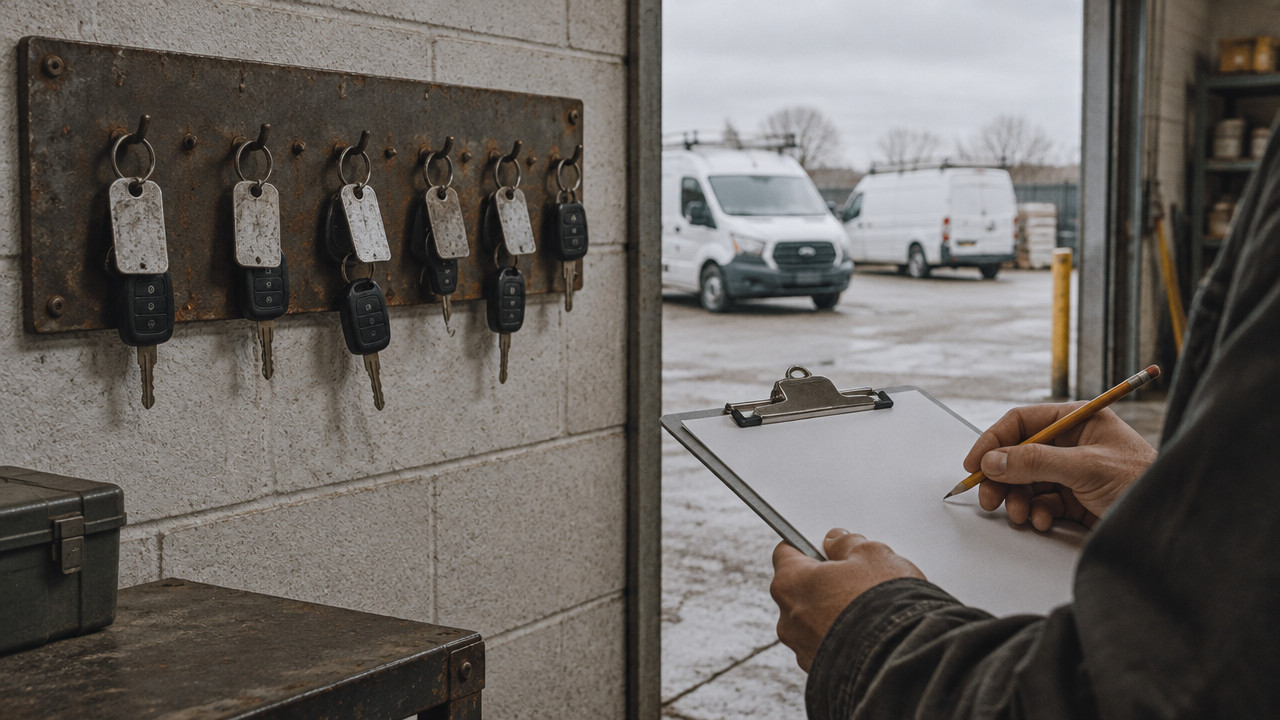
The day runs on a fixed rhythm. The yard manager arrives before the first driver, checks the lot, and confirms which units returned overnight. Before dispatch makes its first call, the yard needs to know what is available. The walk-through is not a casual glance. It is a systematic check of every vehicle location, every key on the board, and every open service tag from the day before. This is where the real answer to "what does a yard manager do in a small fleet operation" becomes clear: the job is a constant loop of verification.

According to Jobdescription, yard managers in small fleet operations are responsible for overseeing daily operations within a facility's trailer yard, managing yard jockeys, tracking trailer inventory, coordinating door assignments, and ensuring timely loading and unloading. In practice, that means the yard manager knows which bay holds the parts delivery, which stall has the van waiting on a brake job, and which truck needs an inspection sticker before it can roll. The role ties together the physical yard with the paper or digital records that dispatch trusts.
For contractor fleets, the stakes are higher. A crew that shows up to a job site without the right equipment loses the day. The yard manager ensures the right truck is ready with the right gear, and that any overnight issue is flagged before the morning briefing. The job does not end at dispatch. It continues through the day as units return, drivers report issues, and the shop updates its list of what needs attention before tomorrow.
- Walk the yard before first light confirm every unit is present and note any that returned late or with defects.
- Check the key board and log ensure every key matches its vehicle and every return is recorded.
- Review the shop schedule know which units are in for service and when they are expected back.
- Update the readiness board mark units as ready, in shop, or due for next service.
- Brief dispatch and drivers communicate the morning status before the first roll-out.
- Track inbound units throughout the day log returns, defect reports, and any new shop intake.
- Close the day with a final count verify every unit is accounted for before securing the lot.
Where the Role Overlaps With Fleet Management and the Shop
In a small fleet, the yard manager often stands at the center of a triangle that includes the shop, dispatch, and the owner. The role is not limited to watching the gate. It includes decisions about service timing, inspection schedules, and sometimes procurement. When a van comes back with a grinding brake, the yard manager decides whether it goes to the shop today or waits for the scheduled slot. That decision balances operational need against shop capacity, and it requires a working knowledge of fleet maintenance coordination.
The overlap with fleet management is practical, not theoretical. The person running the yard is often the same person who tracks fuel use, schedules oil changes, and manages vendor relationships. In trades and service fleets, this overlap is the norm rather than the exception. The yard manager is the link between what happens on the lot and what appears on the balance sheet. A missed inspection or a delayed repair shows up as downtime, and downtime in a small fleet is felt immediately.
The handoff to the shop is where many operations break down. The driver reports a problem, the yard manager logs it, but the message never reaches the mechanic. Or the mechanic finishes a repair, but dispatch does not know the unit is ready. A simple status board eliminates that gap by showing both parties the same information at the same time. The shop marks a van "ready." Dispatch sees it. The yard manager confirms the keys are back on the board. No phone calls, no group chat scroll, no guessing.
| Task | Yard Manager | Shop | Dispatch |
|---|---|---|---|
| Morning vehicle check | Yes physical walk-through | Support on defect identification | No |
| Mark unit ready for service | Confirms status | Updates after repair | Sees final status |
| Log driver defect reports | Yes first intake | Action on repair items | Notified of impact |
| Key control and tracking | Yes owns the board | No | No |
| Schedule inspections | Coordinates timing | Performs inspection | Plans around downtime |
| Release decision each morning | Yes final authority | Input on readiness | Acts on decision |
Why the Spreadsheet and Group Chat Break at 6 a.m.
The spreadsheet is the original fleet management tool, and for a yard of ten trucks it works fine. At thirty or forty, the cracks show. The problem is not the spreadsheet itself. The problem is that one person owns it, and nobody else can see the real version. Dispatch works off a saved file from yesterday. The shop writes updates on a whiteboard that never gets entered. The driver group chat fills with messages about who saw what, and by morning the truth is buried under a hundred unrelated posts.
Rental lots face this exact mismatch every day. The booking calendar says a car is available. The key hook is empty because the car is in the shop. A customer shows up, and the desk has to explain that the reservation was never more than a hope. The yard manager knew the car was not ready, but that knowledge lived in a notebook or a text thread, not on a board the front desk could see. The gap between what is booked and what can leave is where customer trust disappears.
According to Terminal Industries, a significant challenge for small fleet operations is the lack of real-time visibility into trailer locations and yard activities. That visibility gap is not about GPS. GPS tells you where a vehicle is. It does not tell you whether that vehicle is cleared to leave. The morning decision is about permission, not position. A van in the lot is still "in shop" if the brakes are not done, and no satellite tracking changes that status. The failure happens when dispatch sends a vehicle that the yard manager knows is not ready, but the message never crossed the gap between the sheet and the dispatch desk.
- Version conflict two people update the same spreadsheet and save conflicting versions.
- Chat noise defect reports and shop updates get buried under unrelated messages.
- Single point of failure only one person knows the real status, and when they are out, nobody knows.
- No audit trail when a mistake happens, there is no record of who marked what and when.
How to Give Your Yard Manager a Simple Readiness Board
The fix is simpler than most fleet software suggests. You do not need an ERP. You do not need a GPS contract. You need one row per vehicle with three states: ready, shop, and next service. That board is the answer to the morning question. Dispatch checks it. The shop updates it. The yard manager owns it. Everyone sees the same status at the same time, and the gaps between spreadsheets and group chat disappear. The board replaces the morning argument about which van can leave with a single visible answer.
The cost model is straightforward. At per-vehicle pricing of $2.99, a fleet of 30 vehicles pays less than $90 a month. No multi-year contract. No hardware to install. The board lives on a phone or a tablet, and the setup takes minutes, not weeks. The yard manager does not need training on a complex system. The interface shows what matters: which vehicles are ready, which are in the shop, and which need service soon. That is the information that drives the morning decision.
- List every vehicle on one board import from your existing spreadsheet or enter manually.
- Set three status options ready, in shop, and due for next service cover 95 percent of decisions.
- Assign one owner for the board the yard manager updates status; dispatch and shop view only.
- Train the team to check before the morning roll-out dispatch reads the board, not the chat, before assigning routes.
This approach does not try to solve every fleet problem. It solves the specific problem of the morning release decision. The yard manager still needs to walk the lot, check the keys, and talk to the shop. The board does not replace the work. It replaces the confusion that happens when the work is recorded in five places that never match. When dispatch trusts the board, the morning runs smoother. When the yard manager does not have to answer the same question ten times before breakfast, the day starts with less friction.
Yard Manager Questions Small Fleets Ask
Does a fleet of 15 vehicles really need a dedicated yard manager?
Yes. A fleet of 15 vehicles has about 45 decisions each morning: which units are ready, which are in shop, and which need service soon. Without one person owning those decisions, dispatch guesses or the owner fields calls all day. The yard manager role might be part-time or combined with driving, but the function is essential. At $2.99 per vehicle, a readiness board costs less than one missed morning assignment and protects the decision-maker from constant interruptions.
What happens to the board when the yard manager is out sick?
The board keeps working. Because the status lives on a shared system, not in one person's head or on one person's phone, the backup can see what is ready and what is in shop. The morning decision does not stop because one person is out. The owner or a trusted driver can step in and read the same board. The gap is smaller than the gap when the spreadsheet owner is absent, because the information is not locked in a private file.
Who should mark a vehicle as in the shop: the driver, the mechanic or the yard manager?
The yard manager owns the board, but the shop can update it. The driver reports the defect. The mechanic confirms the unit is in for service. The yard manager verifies the status and clears the unit for release when the work is done. The important thing is that one board holds all these updates. When the shop marks a van "ready," dispatch sees it immediately. The hand-off happens in real time, not at the end of a shift.
Is a yard manager the same as a fleet manager in a small business?
They overlap, but they are not the same. A fleet manager handles procurement, compliance, and financial decisions about vehicle assets. A yard manager handles daily operations: what is on the lot, what is ready to leave, and what needs attention before the next run. In small fleets, one person often wears both hats. The distinction matters when the business grows enough to split the roles. The readiness board serves the yard manager's daily decision, not the fleet manager's strategic planning.
Can a rental lot use the same yard routine as a landscaping crew?
Yes, the core routine is the same. Both operations need to know what is ready to rent or send to a job, what is in the shop, and what needs service. The difference is the customer hand-off on a rental lot versus the crew hand-off for landscaping truck fleets. The board works for both because it answers the same question: is this unit allowed to leave right now? The labels may change, but the decision is identical.
Do I need GPS to run a yard well?
No. GPS tells you where a vehicle is. It does not tell you whether the vehicle is cleared for service. A van can be parked in the yard and still be "in shop" because the brakes are not done. The yard decision is about permission, not location. A readiness board gives you the answer GPS cannot provide. For small fleets that do not need routing or tracking, the board is sufficient and far less expensive.
Tue Nov 17 · Editorial Team