Vehicles Manager
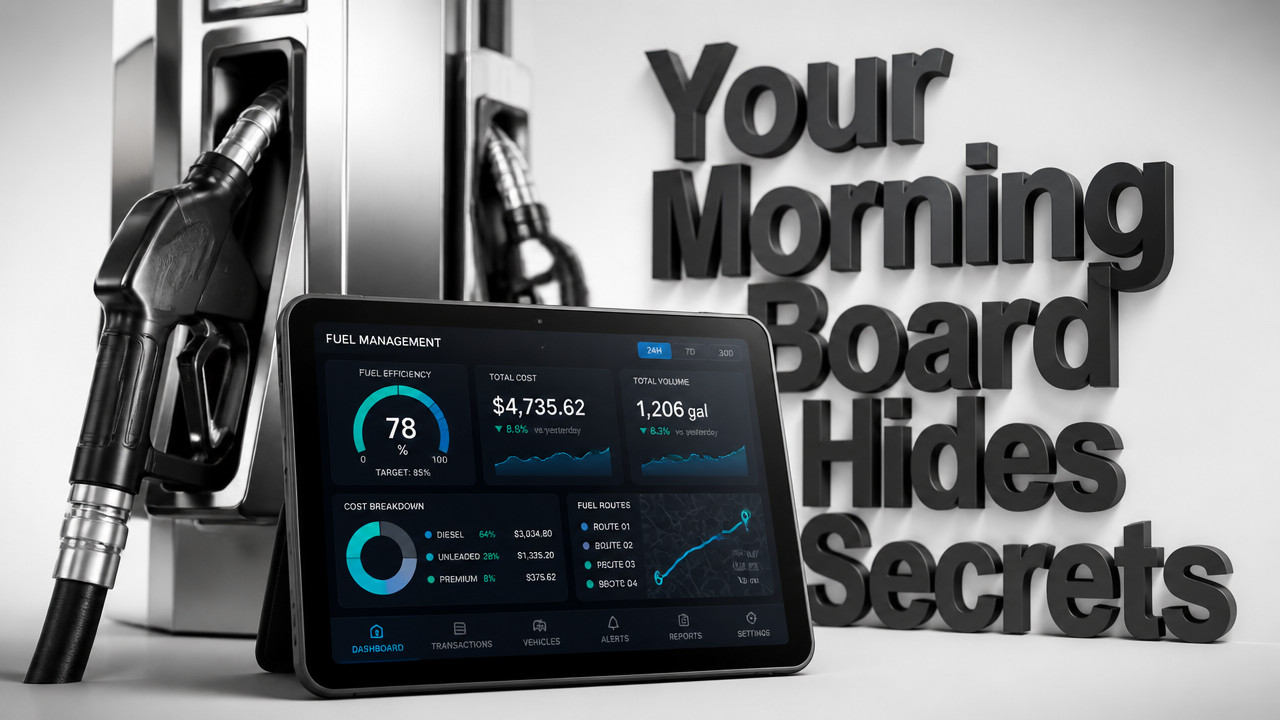
Fuel Management Fleet: Why Your Morning Board Matters More
Most contractors searching for fuel management fleet systems think they need a fuel log. The real failure happens at 6:00 AM when two people mark the same van ready and in shop, and dispatch sends it anyway because Excel and a WhatsApp thread cannot hold one truth. Fuel is 25–30% of operating costs, but a van leaving the yard with a cracked transmission costs you the entire day, the customer, and the tow bill. The gap is not the fuel card reader. It is knowing which vehicle may leave before the keys are handed out.
Quick Answer: Fuel Management Does Not Stop a Van Already Marked Shop
Traditional fuel management tracks what happens after the wheels are already turning. It logs gallons, monitors idle time, and reconciles fuel card receipts. These tools matter for cost control, but they cannot tell you which vehicle is sitting in the bay with a mechanic under the hood. The morning dispatch problem is not a fuel problem. It is a status consensus problem.
When the spreadsheet owner is out sick, the yard runs on guesswork. Dispatch calls the shop. The shop says the van was fixed yesterday. The driver says it is still in the bay. Nobody knows which version of reality is correct, so the van gets handed out anyway. Fuel logs and telematics cannot fix this because they answer where the vehicle is, not whether it is cleared to leave.
A live readiness board solves the 6 AM collision by holding one status per vehicle that everyone can see and trust.
- Fuel tools track consumption gallons, MPG, idle hours, card transactions
- GPS tracks location where the vehicle is right now, geofence alerts
- What breaks at 6 AM two people mark the same van differently, dispatch sends the wrong one

Why Small Fleets Search for Fuel Management Fleet Solutions
The typical buyer runs a 10 to 60 vehicle operation. It might be a paving contractor with dump trucks, a tool rental yard with vans, or a landscaping crew with a mix of mowers and haulers. The morning routine looks the same everywhere. The yard manager opens a saved spreadsheet from yesterday. Someone has texted updates overnight on WhatsApp. Neither matches.
According to Fuellogic, fuel constitutes 25% to 30% of total fleet operating expenses, making it a prime target for cost reduction efforts. That statistic drives owners toward fuel management fleet searches, hoping software will fix the chaos. But the chaos is not happening at the pump. It is happening in the yard before the engines start. A study by Simplyfleet noted that 14 fleets participating in the North American Council for Freight Efficiency's study saved approximately $512 million by operating more efficiently. Efficiency starts with knowing what can leave the yard, not just where it goes.
The buyer searches for fleet fuel tracking or vehicle fuel monitoring because those are the terms the industry sells. What they actually need is contractor fleet boards that show one row per vehicle with a simple status: ready, in shop, or due for service.
| Search Term | Actual Failure | What Fixes It |
|---|---|---|
| Fuel management fleet | Van sent to job already marked in shop | Live status board (ready/shop/service) |
| GPS fleet tracking | Dispatch assumes location means clearance | Operational readiness status, not coordinates |
| Fleet maintenance software | Shop status lives in a separate tool dispatch cannot see | One board for yard, shop, and dispatch |
The Three Fleet Management Gaps That Fuel Logs and GPS Cannot Close
Fleet operations management has a blind spot that fuel cards and telematics do not address. The gap shows up in the morning handoff, when the yard manager, dispatcher, and shop need to agree on what can leave. Traditional tools assume everyone already knows. They assume the van is in the yard because the GPS says it is parked. They do not know the transmission is on the floor.
Small fleet management needs something simpler than an ERP and lighter than a telematics platform. It needs rental fleet status boards that show the truth at a glance.
- Gap 1: Real-time status consensus a single source of truth for ready, shop, or next service that replaces conflicting spreadsheet versions and chat threads
- Gap 2: No hardware, no contract lock-in GPS contracts run three years and require box installation; a status board runs in a browser with no device and no long-term commitment
- Gap 3: One board replacing spreadsheet and chat instead of a saved file that only the yard manager updates and a WhatsApp group where everyone argues, a live board shows the row once
How to Replace Your Spreadsheet and WhatsApp Thread in 15 Minutes
The hardest part of fleet status board adoption is not the setup. It is admitting that the spreadsheet has been failing for months. Once the yard manager accepts that Excel cannot hold one truth when three people need to update it simultaneously, the board becomes obvious. Vehicles Manager is built for the 10 to 60 vehicle contractor who needs $2.99 per vehicle pricing without the GPS upsell.
Setup does not require a consultant or a multi-day implementation. There is no card to start. The first month is free. The board is live the moment you add the first vehicle.
- Open a board with no credit card and no contract the first month is free so you can test it against a real morning rush.
- Add vehicles and set initial status for each ready, shop, or next service matching what the mechanic and yard know today.
- Share the board link with yard manager, dispatch, and shop so everyone sees one truth live instead of arguing over WhatsApp.
Why $2.99 Per Vehicle Beats a Three-Year GPS Contract for Status Tracking
GPS contracts were designed for large fleets with dispatch desks. They lock you in for three years, charge per device, and bundle features most small contractors never use. If all you need is to know whether the van can leave, paying for geofencing, driver behavior scoring, and route optimization is overkill. The contract penalty keeps you paying even after you realize you only needed the morning board.
Status boards charge per vehicle with no hardware and no multi-year lock. A 25-vehicle fleet pays $74.75 per month after the free trial. No box to install. No installation appointment. No contract that auto-renews. Vehicles Manager serves landscaping fleet boards and other small contractors who need status visibility without the telematics burden.
| GPS Contract Model | Status Board Model |
|---|---|
| $30–$50 per vehicle/month bundled | $2.99 per vehicle/month standalone |
| 3-year contract with early termination fee | Month-to-month, cancel anytime |
| Tracks location, speed, geofence | Tracks operational status: ready/shop/service |
| Requires hardware installation | Browser-based, no device in vehicle |
| Built for large fleets with dispatch desk | Built for 10–60 vehicle contractors |
Municipal, Rental, and Contractor Fleets: Which Board Fits Your Yard
Not every yard operates the same way. Municipalities have departments that do not talk to each other. Rental lots have booking calendars feeding into a key board. Contractors have dispatch and shop colliding at 6 AM. Each needs municipal fleet boards or rental-specific setups that respect how the work actually flows.
- Municipal fleets public works, parks, and streets need per-department visibility so the mechanic knows which truck belongs to which crew without cross-department confusion.
- Rental fleets the booking calendar says reserved, the key hook says available, and the shop says in for oil change; the board aligns all three before the customer arrives.
- Contractor fleets dispatch and shop must agree before 6 AM or the crew leaves in a van that cannot make it to the job site, ruining the schedule and the margin on that job.
What Fuel Management Fleet Software Misses: The 6AM Handoff
The handoff is the moment the keys leave the hook. Everything before that is preparation. Everything after is damage control. Fuel management fleet software, telematics platforms, and ERP systems operate after the handoff. They tell you what already went wrong. They do not stop the wrong vehicle from leaving.
Fleet maintenance tracking helps you schedule oil changes. Vehicle fuel monitoring helps you catch theft. But neither tells the morning dispatcher that Van 12 is in the shop with a busted axle. The driver does not know. Dispatch does not know. The customer finds out when the van does not show up.
The cost of one bad handoff includes more than the tow bill. It costs the schedule for the day, the trust of the customer, and the confidence of the crew. mover fleet boards prevent the handoff failure by showing status before the keys move.
Key Takeaways: One Row Per Vehicle, Three States, No Contract
The morning board answers one question: which vehicles may leave. It does not need fuel logs, GPS coordinates, or a three-year commitment. It needs one row per vehicle, three states, and a price that fits a 15-vehicle yard. Vehicles Manager offers trades fleet boards that do exactly this.
- Ready, shop, next service three states cover what the yard needs to know before 6 AM.
- $2.99 per vehicle, no GPS, no contract pricing built for small fleets, not enterprise bundles.
- One board replaces spreadsheet and WhatsApp no more conflicting versions or missed messages.
- Start free month, no card required test the board against your real morning rush before you pay.
FAQ: Fuel Management Fleet and Morning Board Questions
Does this replace fuel cards?
No. Fuel cards track purchases after the fact. This board tracks operational status before the vehicle leaves the yard. Use both fuel for cost control, status for dispatch.
Do I need GPS for this to work?
No. GPS shows location. The board shows readiness. A van can be parked in the yard and still not cleared to leave because it is waiting on parts.
What if I have multiple yards?
Each branch sees only its own vehicles. You would create a board per location rather than mixing vehicles across yards.
How fast is setup?
Under 15 minutes. Add vehicles, set initial status, share the link. No hardware, no installation, no contract.
Can I cancel anytime?
Yes. There is no multi-year lock-in. Cancel by deleting the board. You stop paying the moment you stop using it.
For yards ready to stop the 6 AM argument, shuttle fleet boards and similar options offer a path forward. The spreadsheet had a good run. WhatsApp was fine for a while. But when van 12 goes out with a cracked transmission and the customer is waiting, the cost of free becomes obvious. One board. One row. Three states. $2.99 per vehicle. Start the free month today.
Wed Oct 07 · Josh B