Vehicles Manager
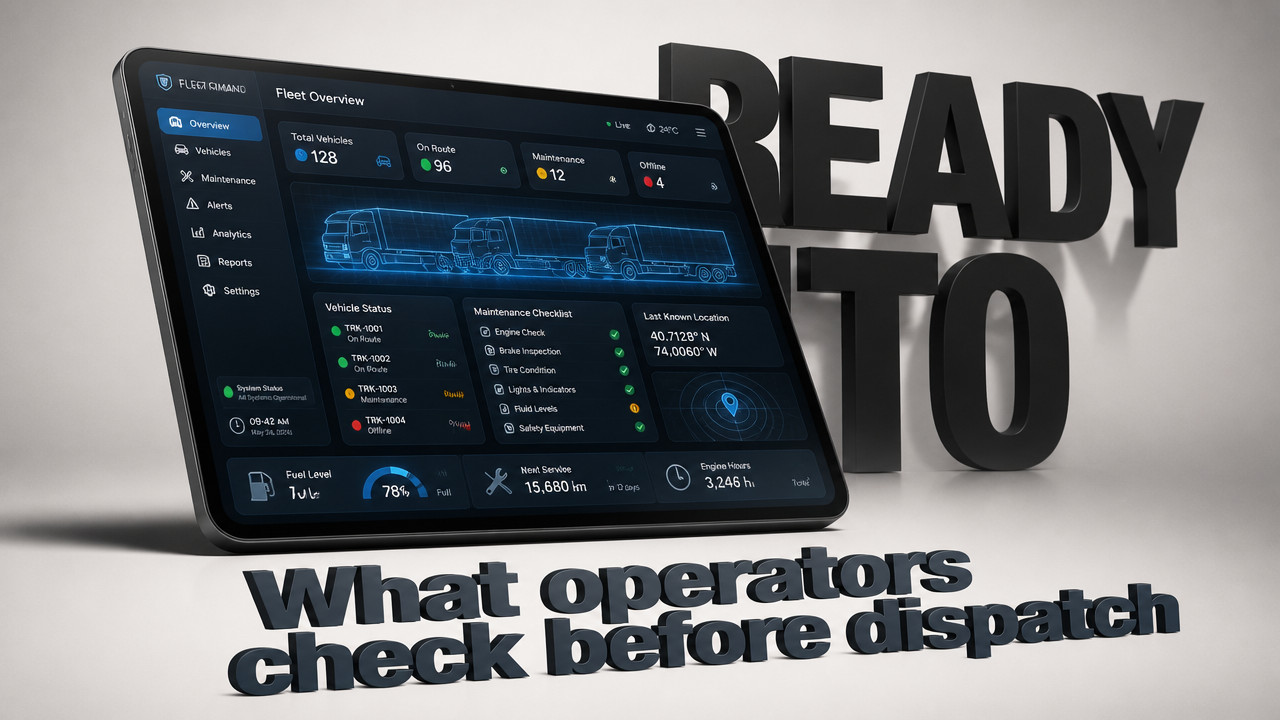
How Small Fleet Operators Track Which Vehicles Are Ready Each Morning
Small fleet operators managing 10-60 vehicles typically track morning readiness through three methods: shared spreadsheets paired with WhatsApp threads, telematics dashboards that show location but not shop status, or dedicated readiness boards that display real-time vehicle availability. The gap between "where the truck is" and "whether it can leave" causes most 6 a.m. failures when two people mark the same van ready and in-shop simultaneously, dispatch sends a broken unit because the last saved file and the chat thread don't match.
Quick Answer: Three Systems Fleet Operators Use to Track Morning Readiness
Fleet managers across contractor and rental yards rely on distinct systems to manage their morning dispatch. The choice usually comes down to what information matters most at 6 a.m. location data, shop status, or a simple yes/no on whether a vehicle can leave the yard. Most yards start with spreadsheets, graduate to GPS telematics, and eventually discover that neither truly solves the morning board problem.
The right system depends on what you track. Spreadsheets are flexible but error-prone in multi-user scenarios. Telematics platforms excel at showing you where a van is right now, but struggle to show if it has a mechanical issue that prevents departure. Dedicated live readiness boards focus entirely on yard availability one row per vehicle, updated in real time, visible to everyone who needs to dispatch units.
| Method | What It Tracks | Gap for Dispatch | Typical Cost |
|---|---|---|---|
| Spreadsheet + WhatsApp | Manual status entries, chat history | Version conflicts, stale data, no real-time sync | Free (labor cost high) |
| GPS Telematics | Location, speed, geofence | Location ≠ permission to dispatch; no shop status | $20-40/vehicle/month + contract |
| Live Readiness Board | Ready/shop/service status per vehicle | No GPS tracking; yard-focused only | $2.99/vehicle/month |

[2026 Data] Why Spreadsheets and WhatsApp Fail Before 7 a.m.
The morning rush exposes every flaw in a spreadsheet-based system. When two people open the same Google Sheet or Excel file at 6 a.m., they often work from different versions. One mechanic marks unit NJ-2201 "in shop" at 6:05. The yard manager marks it "ready" at 6:07 based on yesterday's status. Dispatch sends it out at 6:15. By 7 a.m., the driver calls in stranded on the side of the highway with a transmission warning light that everyone knew about the night before.
This version conflict problem compounds with size. A 15-vehicle yard might limp by with a shared spreadsheet because everyone sits in the same room. A 40-vehicle contractor fleet spread across three job sites? The spreadsheet becomes a liability. According to Buscmms, small fleet operators employ several modern methods to track vehicle readiness for morning dispatch, though many still default to manual tools that create these exact synchronization failures.
The WhatsApp thread makes it worse, not better. Chat scrolls fast. A status update posted at 5:45 a.m. gets buried by thirty messages about driver availability, customer requests, and lunch orders by 6:30. The critical information who marked what and when disappears into the scroll history. Dispatchers end up searching the chat for the word "shop" while the phone rings and drivers wait in the yard.
- 6:05 a.m. Mechanic opens spreadsheet on mobile, marks van NJ-8844 "transmission issue," saves locally
- 6:07 a.m. Yard manager opens same spreadsheet on desktop, still shows "ready" from yesterday, doesn't refresh
- 6:12 a.m. Dispatcher assigns NJ-8844 to South loop route based on visible status
- 6:45 a.m. Driver returns to yard, van won't shift past second gear, route delayed two hours
This is what owners mean when they say "Excel is killing me." The tool they trust to run the yard betrays them at the worst possible moment. shipping dispatch boards exist specifically to stop this mismatch replacing the saved file and the chat thread with a single source of truth that updates instantly for everyone.
GPS Telematics Answers Location, Not Readiness [Analysis]
GPS platforms like Motive, Azuga, and Samsara answer one question extremely well: where is the vehicle right now? They show location on a map, track routes, monitor driver behavior, and geofence yards. What they don't show is whether that vehicle sitting in the yard is cleared to leave. The van could be parked in its assigned spot with a blown head gasket waiting for parts. GPS sees "vehicle stationary at yard." Dispatch needs "vehicle forbidden to leave."
This distinction matters for decision-making at 6 a.m. A dispatcher staring at a telematics map sees thirty dots in the yard. Which ones can leave? Which ones have active repair tickets? Which ones are due for oil changes in two days and should stay local? The GPS dashboard can't answer without layering in separate maintenance modules, service tickets, and manual status inputs that cost extra and require training.
Small fleet owners also report hesitation about GPS contracts. Many signed three-year agreements during expansion phases, locked into per-vehicle pricing that includes features they don't use. They wanted tracking for security and route optimization. They got it. But the morning board problem the simple question of which truck can leave remained unsolved. The GPS tells them where the broken van is. It doesn't stop dispatch from sending it.
According to Autosist, small fleet operators employ several modern methods to track vehicle readiness for morning dispatch, but often find that location data alone fails to solve the yard-visibility gap that causes morning dispatch failures. contractor fleet status tracking addresses this by focusing on readiness rather than location a different question requiring a different tool.
How Live Readiness Boards Prevent Double-Dispatch at 6 a.m.
A live readiness board solves the version conflict problem by design. One row per vehicle. Three statuses: ready, shop, next service. When the mechanic marks NJ-2201 "shop" at 6:05 a.m., that change reflects instantly for everyone viewing the board. No refresh required. No save button. No wondering if the spreadsheet updated. The yard manager sees the same status as dispatch sees as the service manager sees in the same moment.
This single source of truth stops the double-dispatch scenario cold. If a vehicle shows "shop," dispatch cannot assign it. The status is visible, time-stamped, and attributed to the person who made the change. No more "I thought someone else cleared it" or "the chat said it was ready." The board is the answer.
- Real-time sync Status updates appear instantly across all devices, no refresh needed
- Yard-specific view Each location sees only its own vehicles, reducing clutter
- Shop flag visibility Vehicles in repair show clearly, preventing accidental dispatch
- Service due dates Next scheduled maintenance visible on the same card
- No scroll-away chat Status stays on the board, not buried in message history
Vehicles Manager offers this solution at $2.99 per vehicle per month with no GPS requirement and no multi-year contract. The platform focuses entirely on the morning board problem replacing the spreadsheet and WhatsApp fight with a tool built for the specific workflow of yard dispatch. simple per-vehicle pricing means no hidden fees, no hardware to install, and no long-term commitment that locks you into features you don't need.
Step-by-Step: Setting Up Morning Status Tracking in 15 Minutes
Transitioning from spreadsheet chaos to a live readiness board takes less time than the morning coffee run. Most small fleet operators complete setup during a single 15-minute call, importing their existing vehicle list and defining the yard structure. The goal is to have the board operational before the next morning dispatch no training sessions, no IT involvement, no database configuration.
- List the trucks (5 minutes) Paste your existing fleet list into the board setup. Unit numbers, vehicle types, and assigned yards import directly from your current spreadsheet or maintenance log.
- Define yard locations (2 minutes) If you operate multiple yards or lots, set each location so vehicles display only to the relevant team. A North yard dispatcher doesn't need to see South yard units.
- Mark current shop status (3 minutes) Update any vehicles currently in repair or holding for parts. This establishes the baseline before the next morning rush.
- Add service due dates (3 minutes) Enter next scheduled maintenance for each vehicle so dispatch sees which units should stay local or avoid heavy routes.
- Share board access (2 minutes) Send login links to yard manager, dispatch, and shop personnel. Each stakeholder sees the same real-time board from their own device.
The system works because it mirrors the existing workflow without adding complexity. Mechanics update shop status. Yard managers update readiness. Dispatch pulls from the ready list. No one waits for a spreadsheet owner to arrive. No one searches WhatsApp history. rental fleet key-hook boards follow the same pattern replacing the key board and booking calendar mismatch with a synced digital view.
Rental Fleets: When Booking Calendar and Key Hook Disagree by Noon [Study]
Rental fleets face a distinct version of the morning board problem. The booking calendar shows a car reserved for a 9 a.m. pickup. The key hook where it should hang is empty. By noon, the customer is sitting in the lobby, the reservation system shows the car available, and no one knows where it is. The shop has it transmission work that started two days ago and never got marked in the calendar.
This calendar-to-key-hook mismatch happens daily on rental lots managing 10-60 vehicles without integrated shop visibility. The person managing bookings works from one system. The shop manager works from another often a whiteboard or paper tickets. The lot attendant walking the rows has no real-time link to either. When these three views disagree, customers wait, vehicles sit idle, and staff spend hours tracking down basic availability.
The failure scenario follows a predictable pattern. Reservation comes in for Unit NJ-1190. Calendar marks it booked. Shop has NJ-1190 on a lift with a clutch replacement. Key hook shows NJ-1190 missing because it's in the bay. Customer arrives. Attendant searches the lot. Attendant checks the shop. Shop says "been here since Monday." Calendar says "booked today." The rental contract that should take ten minutes takes two hours of scrambling.
shuttle fleet availability solves this by connecting booking status to shop status. When a vehicle enters the shop, it automatically reflects as unavailable for reservation. The calendar updates. The board shows the conflict. Dispatch sees reality instead of assuming the key hook tells the whole story.
Who Owns the Morning Board When the Spreadsheet Owner Is Out
The spreadsheet system has a single point of failure: the person who owns the file. In many small fleets, one yard manager maintains the master vehicle list, updates the status each morning, and distributes assignments via WhatsApp or email. When that person is out vacation, sick day, family emergency the board stops working. Dispatch calls around to find out who has the latest version. Drivers wait in the yard. The morning schedule delays by an hour while someone reconstructs the readiness list from memory and chat history.
This dependency risk increases with fleet size. A 15-vehicle operation might have backup knowledge distributed among three people who all know the units. A 50-vehicle contractor fleet? The spreadsheet owner holds institutional knowledge that doesn't exist anywhere else service schedules, ongoing repair tickets, driver assignments, and which trucks have restrictions. When they're gone, the yard operates blind.
stakeholder visibility needs vary by role, but everyone requires access to the same real-time source:
- Yard Manager Needs to mark vehicles into and out of shop status, see next service dates, and manage lot-level availability
- Dispatch Needs to see which vehicles are ready to assign, which are in shop, and which have service restrictions
- Shop Needs to mark repair status, update estimated return to service, and flag parts-holding vehicles
A live board distributes ownership. Each stakeholder updates their domain. Mechanic marks shop. Manager marks ready. Dispatch pulls from the list. No single person becomes the bottleneck. trades and construction fleets benefit particularly from this distributed model foremen, yard leads, and shop supervisors all contribute to the same real-time view without waiting for a central authority to push updates.
Key Takeaways: What Works for 10-60 Vehicle Yards in 2026
Small fleet operators managing 10-60 vehicles in 2026 face a morning dispatch problem that spreadsheets and GPS telematics don't solve. The gap is visibility: knowing which truck can leave, right now, without calling three people and searching a chat thread. Live readiness boards address this gap directly, offering a single source of truth for yard availability at a price point designed for small fleet budgets.
- Spreadsheets fail between 6-7 a.m. when multiple users edit simultaneously, creating version conflicts that dispatch can't see
- WhatsApp buries critical status updates under message scroll, making morning board information unrecoverable in real time
- GPS telematics shows location, not permission knowing where a van sits doesn't tell you if it can leave
- Live readiness boards sync instantly across yard manager, dispatch, and shop with one row per vehicle
- Vehicles Manager costs $2.99/vehicle/month with no GPS requirement, no hardware, and no multi-year contract lock-in
- Setup takes 15 minutes paste your fleet list, mark current status, share access with your team
This solution targets the specific pain point owners voice: "Excel is killing me" and "we're locked in a GPS contract we can't wait to escape." moving company fleet boards follow this model replacing the morning fight with visible, synced, yard-specific readiness that dispatch can trust at 6 a.m.
Frequently Asked Questions
How much does a fleet readiness tracking system cost per month?
Pricing starts at $2.99 per vehicle per month for dedicated readiness board platforms. GPS telematics systems range $20-40 per vehicle monthly plus hardware and contract commitments. Spreadsheet systems appear free but carry hidden labor costs from morning failures and delayed dispatch.
Do I need GPS telematics to track vehicle readiness?
No. GPS tracks location, not shop status or dispatch permission. If your morning board problem is knowing which vehicles can leave the yard rather than where they are once they leave a readiness board solves the need without GPS hardware or tracking subscription.
How long does setup take for a live readiness board?
Most small fleets complete setup in 15 minutes. Import your existing vehicle list, mark current shop status, and share access with your team. No IT support, no database configuration, no multi-day training. The board operates before your next morning dispatch.
Can multiple yard locations use the same readiness board?
Yes. Multi-yard operations set location filters so each yard sees only its own vehicles. Dispatch can view across all locations or filter to specific yards, while shop managers update status for their assigned vehicles only. This reduces clutter and keeps each yard focused on its units.
What triggers switching from spreadsheet to a readiness board?
The common trigger is a dispatch failure sending a van already marked "shop" because the spreadsheet didn't sync, or losing the morning board when the spreadsheet owner is out. landscaping fleet status operations cite these exact scenarios: morning fights over status, vehicles sent out broken, or hours lost searching WhatsApp for the last known update.
Sun Oct 04 · Josh B