Vehicles Manager
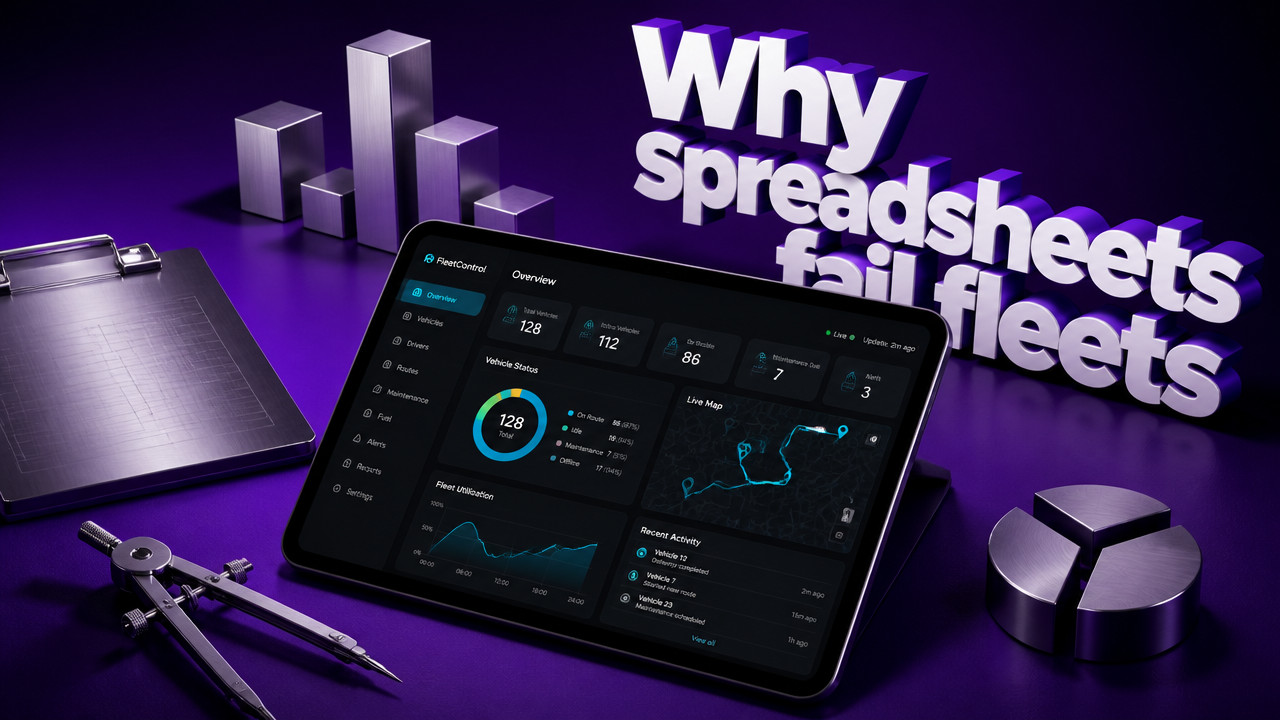
Replace Your Fleet Spreadsheet Without GPS Overhead
A shared Excel file and a WhatsApp thread break down every morning when two people mark the same van ready and in-shop at 06:00. By the time dispatch checks, a truck already sidelined in the shop rolls out to a job site. Small yards running 10–60 vehicles need one live board that shows three facts per unit ready, shop, next service without forcing a three-year GPS contract or an ERP implementation. The gap is not route tracking or fuel logs. It is whether the vehicle sitting on your lot can leave right now.
Quick Answer: One Live Board Replaces the Spreadsheet and the Thread
When owners ask what is the best way to replace a fleet spreadsheet for a small yard, the answer is a single live board that shows one status per vehicle. Three fields drive every morning decision: ready, shop, or next service. Priced at $2.99 per vehicle with no GPS hardware and no multi-year contract, a contractor fleet board ends the version wars that start at dawn.

Why Excel and WhatsApp Fail at 06:00 Every Morning
Two people open the same shared spreadsheet within minutes of each other. Both think they have the current version. The yard manager marks Unit 12 in shop for a brake job. The dispatcher, working from a cached copy on a second monitor, marks Unit 12 ready. The last person to save wins and the morning crew loses.
Simultaneous edits happen more often than owners realize. When the differences between the saved file and the WhatsApp thread become obvious, the damage is already done. A truck sits at a job site without the tools it needs. A rental customer waits while staff search for a key that should be on the hook.
A rental fleet status board prevents the key-hook versus calendar collision that costs rentals their reputation. The booking system says the car is available, but the key hook is empty because the vehicle went into the shop three hours ago.
- Version fragmentation Multiple people edit from different devices, creating conflicting file versions that overwrite each other on save.
- Chat thread burial Shop updates sent via WhatsApp get buried under 47 other messages, leaving dispatch unaware of stalled repairs.
- No audit trail When two people mark different statuses, there is no record of who changed what, when, or why.
- Single point of failure If the person who owns the master sheet is out sick, the yard operates blind.
[Study] Small Yards Lose Four Hours Per Week to Version Confusion
Operations running 10–60 vehicles report losing blocks of time every week to manual reconciliation. The morning phone call board holder vs. shop vs. dispatcher eats 20 minutes. Multiply that across five days. Add in the duplicate dispatch where a shop vehicle leaves the lot, gets recalled, and returns. Fuel burned, crew delayed, job rescheduled.
According to Simplyfleet, fleet management software automates routine tasks such as scheduling maintenance and tracking operational status, reducing the manual overhead that spreadsheets cannot eliminate. Automation replaces the clipboard and the WhatsApp notification with a single source of truth that updates in real time.
| Dimension | Spreadsheet + WhatsApp | Single Live Board |
|---|---|---|
| Status visibility | Last saved file wins; chat updates buried | One status per vehicle, visible to all |
| Update speed | Manual entry; refresh required | Instant status change across devices |
| Audit capability | No record of who changed what, or when | Timestamped updates with user attribution |
The receipt for a brake job sits in a text thread from Tuesday. The shop note about a delayed parts delivery lives in an email nobody forwarded. When every update attaches directly to the vehicle row, the shop coordination system stops relying on memory and message search.
How to Migrate Your Vehicle List in Under 15 Minutes
Exporting from an existing spreadsheet or copying from a WhatsApp thread takes minutes. No database setup, no IT consultant, no multi-week implementation. Open the board, paste the list, and assign yards.
- Copy your vehicle list (2 minutes) Export from Excel or copy the unit numbers from your current WhatsApp thread.
- Paste into the board (1 minute) The system creates one row per vehicle automatically.
- Assign yard visibility (3 minutes) Each manager sees only the vehicles under their site, preventing cross-yard confusion.
- Attach service dates (4 minutes) Add next-service dates and shop notes to each vehicle row for maintenance visibility.
- Verify and share (5 minutes) Check that every unit appears, then share the board link with your yard team.
The first month open with no card gives yards time to confirm the board works before any payment. No credit card required to start, no setup fee, no long-term lock-in.
Three Status Fields Stop Shop Vehicles From Leaving the Lot
A fleet readiness board needs only three states to prevent the morning mistake. Ready means the vehicle can leave right now. Shop means it cannot. Next service flags units approaching maintenance windows before they become roadside failures.
GPS tells you where the vehicle is. It does not tell you whether that vehicle is cleared to leave. A truck parked on the lot with a GPS ping can still have a failed inspection sticker, a missing fire extinguisher, or a brake line waiting on parts. Location data answers geography. Readiness data answers operations.
A single-row update prevents the double-send. When the shop marks a unit in shop, that status appears instantly for every person checking the board. No version conflict, no cached overwrite. landscaping fleets that run multiple crews from one yard see immediate benefit one look at the board tells dispatch which truck actually rolls.
Contractor Yards and Rental Lots Need Different Board Views
Yard-level visibility controls prevent the quiet borrowing that wrecks schedules. A manager at the north site should not see trucks assigned to the east yard. When boundaries stay clear, cross-site confusion disappears.
The no-quiet-borrowing rule means no vehicle leaves without a status change. Rental operations benefit especially booking calendar and vehicle status stay synchronized because the board shows the real condition, not the assumed availability.
Shop transparency increases when receipts and job notes attach directly to vehicle rows. The mechanic uploads the invoice. The yard manager sees the parts cost and the labor hours. No digging through email chains or asking who approved the repair.
- Yard isolation Each site manager views only their assigned vehicles, eliminating cross-yard scheduling errors.
- Receipt attachment Service invoices and shop notes stay with the vehicle row, not in a separate filing system.
- No silent checkouts Every status change requires board confirmation, ending handshake deals that vanish from record.
trades fleets running multiple crews from a single yard find that visibility controls stop the morning phone tag. One board, one status per truck, no guessing.
Why GPS Contracts and ERP Projects Miss the Morning Board Problem
GPS platforms sell tracking. They answer: where is the vehicle right now? That data matters for route optimization and theft recovery. It does not solve the morning board. A truck located on the lot can still be dead-lined for maintenance. A van pinging at the yard gate might have a suspended registration.
ERP implementations take months. They require workflow mapping, custom configuration, and training across departments. For a yard that needs one row per vehicle with three status options, an ERP project is the wrong tool like buying a bulldozer to plant a garden.
Three-year GPS lock-ins protect the vendor, not the yard. If the system does not solve the morning problem, the yard still pays. A vehicle status tracking board at $2.99 per vehicle with no contract gives yards clarity without the handcuffs.
| Capability | GPS/ERP Platform | Readiness Board |
|---|---|---|
| Primary data | Location, routing, compliance | Vehicle readiness status |
| Setup time | Weeks to months | Under 15 minutes |
| Contract length | 2–3 year commitments common | No multi-year contract required |
| Hardware required | GPS devices, installation | No hardware, no installation |
movers fleets that need to know which truck can load furniture this morning find more value in readiness status than in breadcrumb trails. The job is ready, the crew is waiting, and the board confirms which unit can roll.
Key Takeaways: Replace Excel Without Adding Tracking Hardware
A live board replaces the spreadsheet and the WhatsApp thread with one status per vehicle. No GPS hardware, no ERP implementation, no multi-year commitment. $2.99 per vehicle after the first free month setup takes 15 minutes.
- One status per vehicle Ready, shop, or next service visible to everyone who needs to know.
- No GPS required Readiness, not location, drives the morning dispatch decision.
- $2.99 per vehicle Flat monthly pricing with no hardware, no installation, no long-term contract.
- 15-minute setup Paste your list, assign yards, add service dates, and run.
- First month free Confirm the board works before any payment.
A live readiness board ends the version conflict that costs yards hours every week. The spreadsheet era ends with a board built for how small yards actually operate.
FAQ: Replacing a Small Yard Fleet Spreadsheet
How long does setup take for a 30-vehicle yard?
Under 15 minutes. Paste your list from Excel or WhatsApp, assign yard visibility, add service dates, and share the link with your team. No database configuration required.
Does this require GPS devices or installation?
No. This is a readiness board, not a tracking platform. Vehicle status comes from yard team updates, not hardware pings. GPS tells you where the truck is, not whether it can leave.
What happens if the person who owns the spreadsheet is out?
The board keeps working. Every authorized user sees the current status. No single point of failure, no version locked on one person's laptop.
Can rental operations sync booking calendars with vehicle status?
Yes. The board shows real-time readiness, preventing the key-hook versus calendar mismatch that hands out vehicles already in the shop.
What is the cost per vehicle?
$2.99 per vehicle per month after the free first month. No GPS hardware fees, no installation charges, no multi-year contract lock-in.
Is this suitable for larger fleets with dedicated dispatchers?
Optimized for 10–60 vehicles. Larger operations with full dispatch desks and GPS platforms may prefer those systems. Small yards running the morning from a spreadsheet find the most value here.
shuttle fleets and contractor yards alike find that replacing the spreadsheet without adding GPS overhead clears the morning bottleneck in one step.
Fri Oct 16 · Editorial Team